Most siding comparisons talk about cost and stop there. That’s where homeowners make expensive mistakes.
In North Carolina, siding is not just about looks. It is about surviving humidity, heavy rain, storms, and constant temperature swings. The wrong siding will fail faster than you expect. The right one will protect your home for decades with minimal issues.
So the real question is not just Hardie shingle siding vs vinyl siding.
It is this:
Which siding holds up in real-world conditions and saves you money long term?
At CPS Construction Services, we have replaced hundreds of siding systems across Shelby, Gastonia, and surrounding areas. We have seen vinyl fail. We have seen Hardie outperform. This guide breaks down the real differences so you can make a confident decision.
What Is Hardie Shingle Siding?
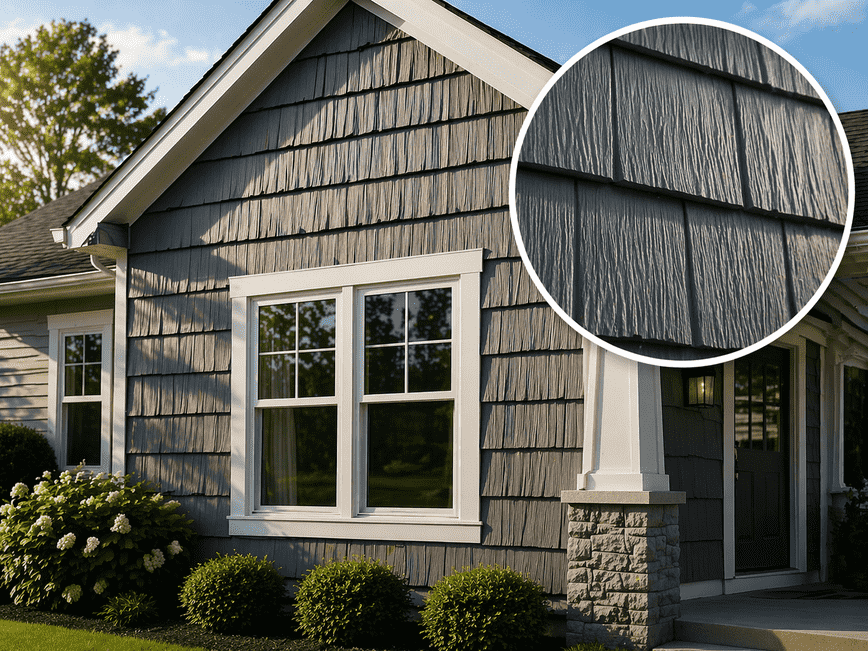
Hardie shingle siding is a type of fiber cement siding made from cement, sand, and cellulose fibers. Manufactured by James Hardie, it is designed to mimic cedar shake siding while delivering superior durability.
Why homeowners choose Hardie shingles:
- Built for moisture resistance and humidity
- Non-combustible and pest resistant
- Designed for long-term performance
- Premium wood-like appearance
It is commonly used for:
- Full siding replacement
- Gables and accent areas
- Craftsman and coastal-style homes
What Is Vinyl Siding?
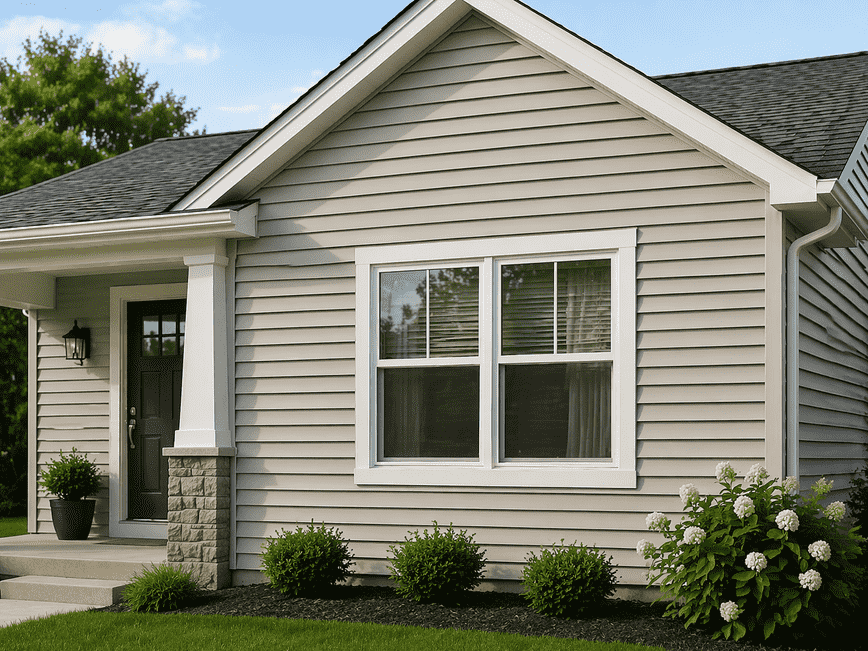
Vinyl siding is made from PVC plastic and is widely used because of its affordability and ease of installation.
Why homeowners choose vinyl:
- Lower upfront cost
- Fast installation
- Minimal maintenance
- Widely available
However, vinyl behaves differently under stress and weather conditions.
Hardie Shingle Siding vs Vinyl: Real Differences That Matter
1. Durability in Real Conditions
This is where the biggest gap shows.
Hardie siding:
- Lifespan: 30 to 50 years
- Resists cracking, impact, and warping
- Holds shape during temperature changes
Vinyl siding:
- Lifespan: 20 to 30 years
- Can crack in cold weather
- Can warp or melt under heat
Bottom line:
If your home is exposed to storms or temperature swings, Hardie siding consistently performs better.
2. Performance in North Carolina Weather
North Carolina creates constant stress on siding:
- High humidity
- Heavy rainfall
- Strong winds
- Heat and UV exposure
Hardie siding is engineered for this environment. It resists moisture absorption and does not expand or contract significantly.
Vinyl siding expands in heat and can allow water behind panels if installation is not perfect.
3. Cost Comparison: Upfront vs Long-Term
Installed Cost Per Square Foot:
- Hardie shingle siding: $11 to $22 per sq ft (NC average)
- Vinyl siding: $3 to $7 per sq ft (NC average)
Average Full Project Cost:
- Hardie siding: $15,000 to $40,000+
- Vinyl siding: $5,000 to $15,000+
Lifetime cost insight:
Vinyl may need replacement sooner, especially in harsh climates. Hardie siding lasts longer, reducing long-term replacement and repair costs.
4. Maintenance and Repair Frequency
Hardie siding:
- Occasional cleaning
- Minimal repairs
- Long-lasting finish
- Paint or finish typically lasts 10 to 15 years before repainting
- More resistant to moisture, reducing mold and rot issues
- Lower repair frequency over lifespan
Vinyl siding:
- Requires cleaning to prevent mold and mildew
- More prone to cracking and panel damage
- May require more frequent repairs over time
- Can warp or fade faster in heat and UV exposure
- Individual panels may need replacement after storms or impact
Bottom line:
Hardie siding has lower long-term maintenance demands and fewer repair needs over time.
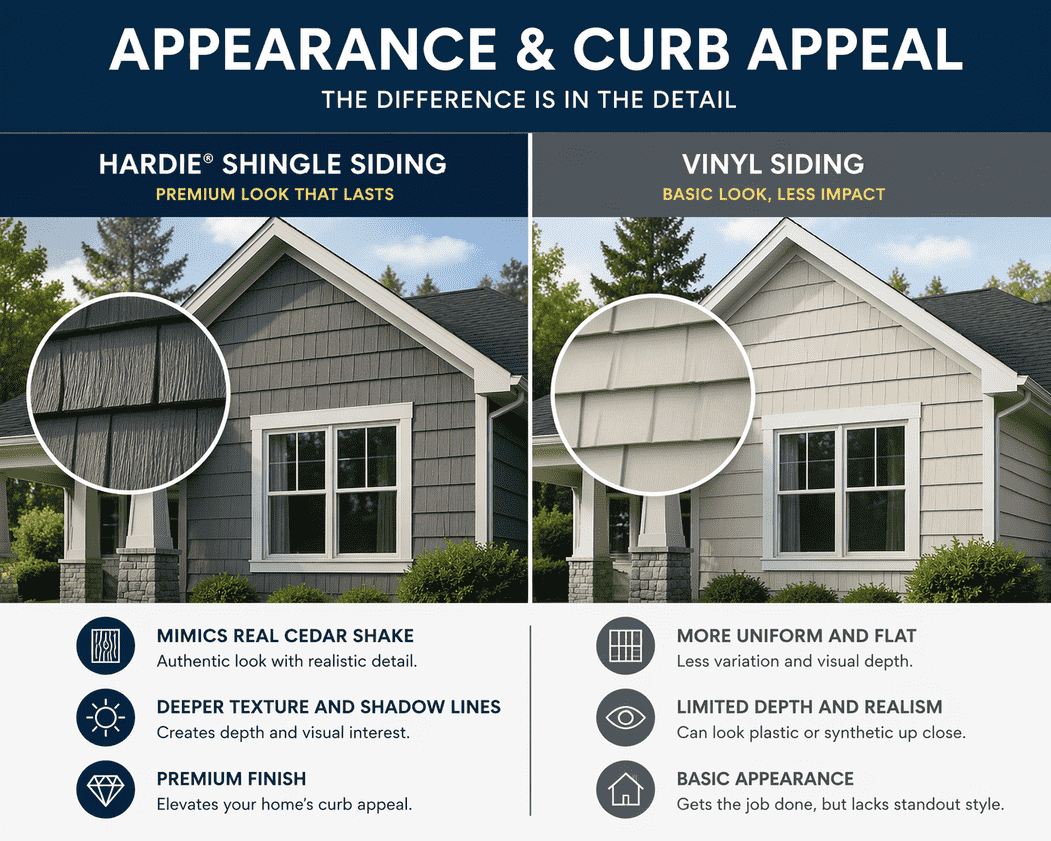
5. Appearance and Curb Appeal
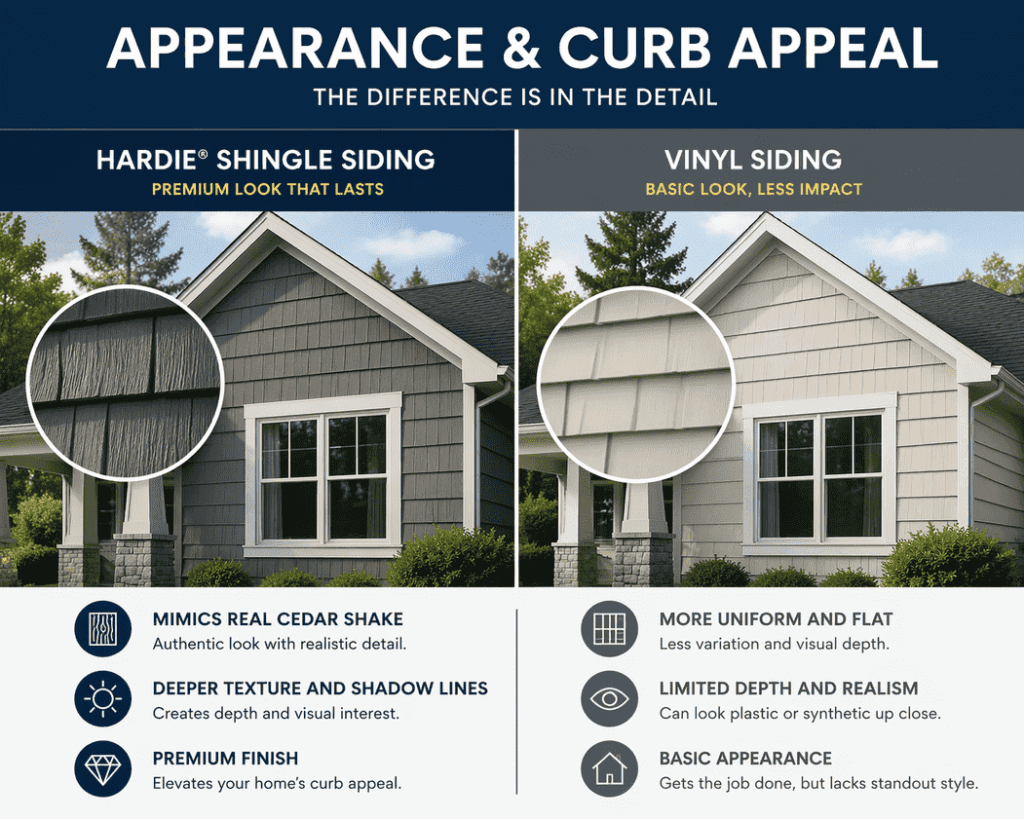
Hardie shingle siding:
- Mimics real cedar shake
- Deeper texture and shadow lines
- Premium finish
Vinyl siding:
- More uniform and flat
- Limited depth and realism
Real impact:
Homes with Hardie siding typically have stronger curb appeal and stand out more in resale markets.
6. Fire and Safety
Hardie siding:
- Non-combustible
- Does not melt
Vinyl siding:
- Can melt under heat
- Less fire-resistant
This matters more than most homeowners realize.
7. Environmental and Long-Term Value
Hardie siding:
- Longer lifespan reduces waste
- More sustainable over time
Vinyl siding:
- Made from plastic
- Shorter lifespan leads to more replacement cycles
Lifetime Cost Comparison
Factor | Hardie Shingles | Vinyl Siding |
Initial Cost | Higher | Lower |
Lifespan | 30–50 years | 20–30 years |
Repair Frequency | Low | Moderate |
Replacement Frequency | Low | Higher |
Long-Term Cost | Lower over time | Higher over time |
Quick Decision Guide
Choose Hardie Shingle Siding if:
- You plan to stay in your home long term
- Your home is exposed to storms or humidity
- You want higher resale value
- You want a premium exterior look
Choose Vinyl Siding if:
- You need a lower upfront cost
- You want a quick exterior upgrade
- You are planning short-term ownership
Final Thoughts
Choosing between Hardie shingle siding and vinyl siding comes down to long-term value versus upfront cost. Vinyl may be cheaper initially, but Hardie siding delivers stronger durability, better resistance to North Carolina weather, and a more premium look that holds up over time.
At CPS Construction Services, we help homeowners in Shelby, Kings Mountain, Gastonia, and surrounding North Carolina areas choose siding that actually performs. If you want lasting protection and fewer future repairs, contact CPS Construction Services today to schedule your inspection and get expert recommendations.
FAQs: Hardie Shingle Siding vs Vinyl
The biggest difference is material and performance. Hardie shingle siding is fiber cement, which offers higher durability, moisture resistance, and longer lifespan, while vinyl siding is PVC-based and more prone to warping and impact damage.
Yes, but not frequently. Hardie siding with ColorPlus Technology can last 10 to 15 years before repainting, significantly longer than traditional painted wood siding.
Yes. Vinyl siding has a lower upfront installation cost, but higher long-term expenses due to more frequent repairs, replacements, and potential damage from weather exposure.
Hardie siding, when installed with proper flashing and moisture barriers, provides better protection against water intrusion. Vinyl siding can allow water penetration if seams or installation are compromised.
Hardie shingles offer a more realistic wood shake appearance with deeper texture, while vinyl siding tends to look flatter and less detailed over time.
Yes. For homeowners planning to stay long-term, Hardie siding offers better durability, fewer repairs, and stronger performance in NC weather, making it a smarter long-term investment.