Cedar shake siding has one of the best looks in the industry. It adds texture, depth, and a natural finish that instantly upgrades curb appeal.
But here is what most homeowners in North Carolina find out later.
That same natural siding often comes with ongoing maintenance, higher long-term costs, and vulnerability to moisture, pests, and weather.
So the real question is not just cedar shake vs Hardie siding.
It is this:
Do you want natural wood that requires constant upkeep, or a material engineered for long-term performance?
At CPS Construction Services, we install and replace both across Shelby, Gastonia, Kings Mountain, and surrounding areas. This guide breaks down the real differences in durability, maintenance, and cost so you can make the right decision.
The Real Difference Most Homeowners Miss
Most comparisons focus on appearance and upfront cost. The real difference is long-term performance.
- Cedar looks better on day one.
- Hardie performs better over decades.
That difference determines whether you deal with ongoing repairs or not.
What Is Hardie Shingle Siding?
Hardie shingle siding is a fiber cement siding made from cement, sand, and cellulose fibers. It is engineered to replicate cedar shake while eliminating the weaknesses of natural wood.
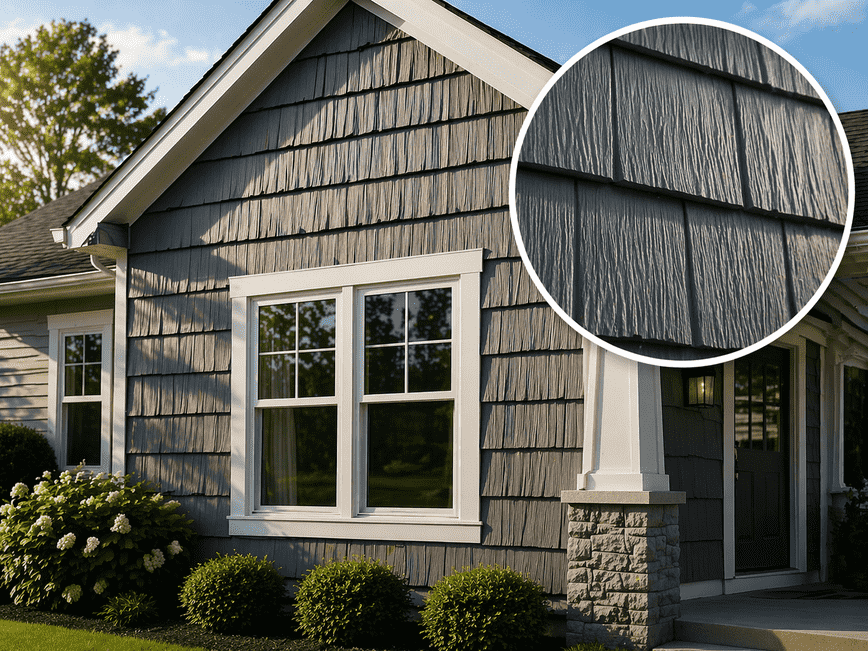
Key benefits:
- Moisture resistant
- Non-combustible
- Pest resistant
- Long lifespan
- Low maintenance
It is commonly used for full siding replacement, gables, and accent areas on homes throughout North Carolina.
What Is Cedar Shake Siding?
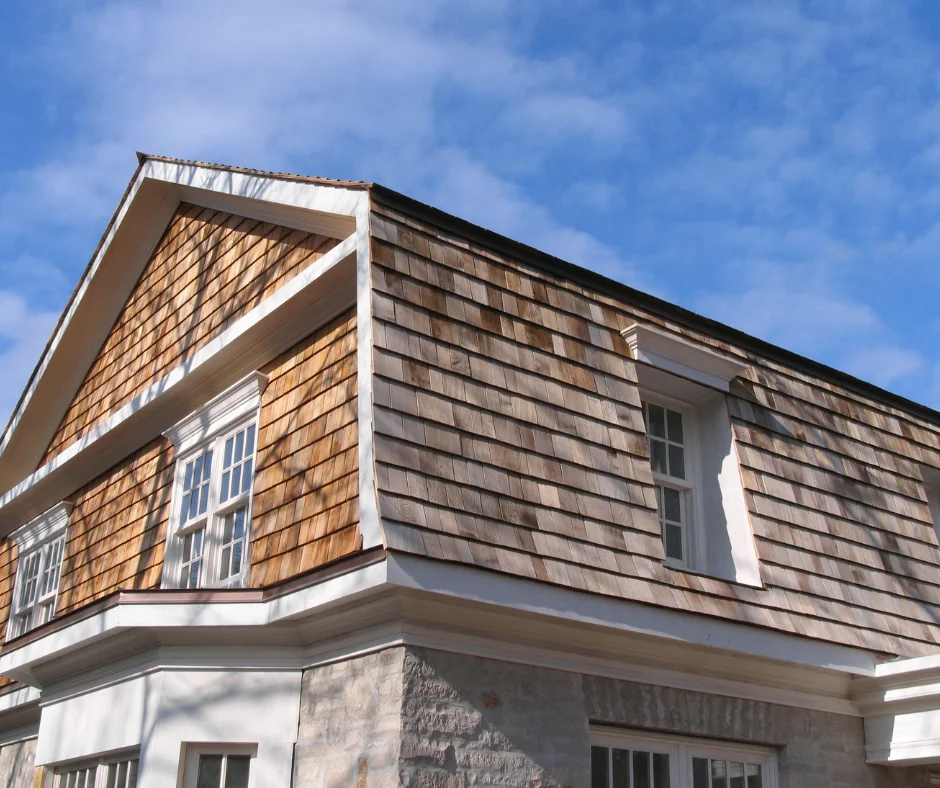
Cedar shake siding is made from natural cedar wood and is known for its rich texture and traditional look.
Key benefits:
- Natural wood appearance
- Unique grain and variation
- Classic architectural style
However, it is a natural material, which means it reacts to moisture, weather, and environmental conditions.
Hardie vs Cedar Shake: Side-by-Side Comparison
Durability and Lifespan
- Hardie siding typically lasts 30 to 50 years with minimal issues. It resists cracking, pests, and moisture.
- Cedar shake siding lasts 20 to 30 years with proper maintenance but is more prone to rot and deterioration.
Bottom line: Hardie lasts longer and performs more consistently.
Performance in North Carolina Climate
North Carolina brings humidity, heavy rain, and storms.
Hardie siding:
- Resists moisture absorption
- Does not swell or warp
- Handles temperature changes
Cedar siding:
- Absorbs moisture
- Can rot or mold
- Requires sealing
Bottom line: Hardie performs better in humid climates.
Maintenance Requirements
Hardie siding:
- Occasional cleaning
- Repaint every 10 to 15 years
- Minimal upkeep
- Resistant to moisture, reducing mold and mildew issues
- Does not require staining or sealing
- Lower risk of cracking, warping, or rot
- Fewer repairs needed over time
- ColorPlus finishes fade slower than traditional paint
- Annual visual inspection recommended after storms
Cedar siding:
- Stain or seal every 3 to 7 years
- Ongoing inspections
- Repairs over time
- Prone to moisture absorption, leading to rot and mold
- Requires regular cleaning to prevent mildew buildup
- Vulnerable to insect and termite damage
- Higher likelihood of cracking, splitting, or warping
- Sections may need replacement due to weather exposure
- Maintenance costs increase over time
Bottom line: Cedar siding requires significantly more maintenance, more frequent upkeep, and higher long-term maintenance costs compared to Hardie siding.
Cost Comparison
Installed cost per square foot:
- Hardie: $7 to $18 (typical), up to $40+ for premium projects
- Cedar: $7 to $16 (typical), can exceed $20+ for premium grades
Average project cost:
- Hardie: $17,000 to $40,000+
- Cedar: $16,000 to $50,000+
Bottom line: Hardie and cedar often have similar upfront costs, but cedar siding typically costs more long term due to ongoing maintenance and repair needs.
20-Year Cost Comparison
Cost Category | Hardie | Cedar |
Initial Cost | $25,000 | $30,000 |
Maintenance | ~$5,000 | $15,000+ |
Repairs | Low | Moderate to High |
Total Cost | Lower | Higher |
Hardie siding typically delivers better long-term value.
Moisture, Rot, and Pest Resistance
Hardie siding:
- Does not absorb water
- Resists mold, mildew, and rot
- Resistant to termites and wood-boring insects
- Maintains structural integrity in humid environments
- Does not swell, warp, or deteriorate from moisture exposure
- Performs well in heavy rain and high humidity conditions
- Lower risk of hidden moisture damage behind siding when properly installed
- Does not provide a food source for pests
Cedar siding:
- Absorbs moisture over time
- Can develop mold, mildew, and rot without maintenance
- Vulnerable to termites, carpenter ants, and insects
- Can swell, crack, or split due to moisture changes
- Requires sealing or staining to reduce water absorption
- Higher risk of hidden moisture damage if not maintained
- Organic material attracts pests over time
Bottom line: Hardie siding provides stronger protection against moisture, rot, and pest damage, especially in humid and wet climates like North Carolina.
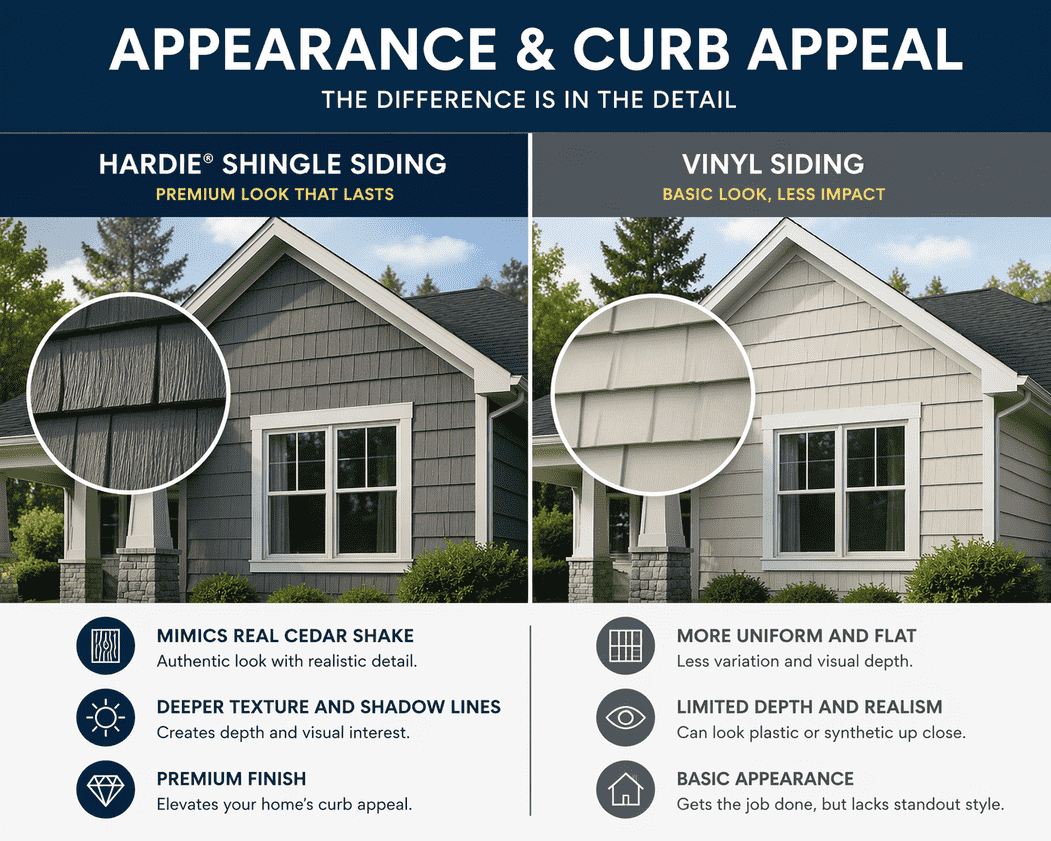
Appearance and Curb Appeal
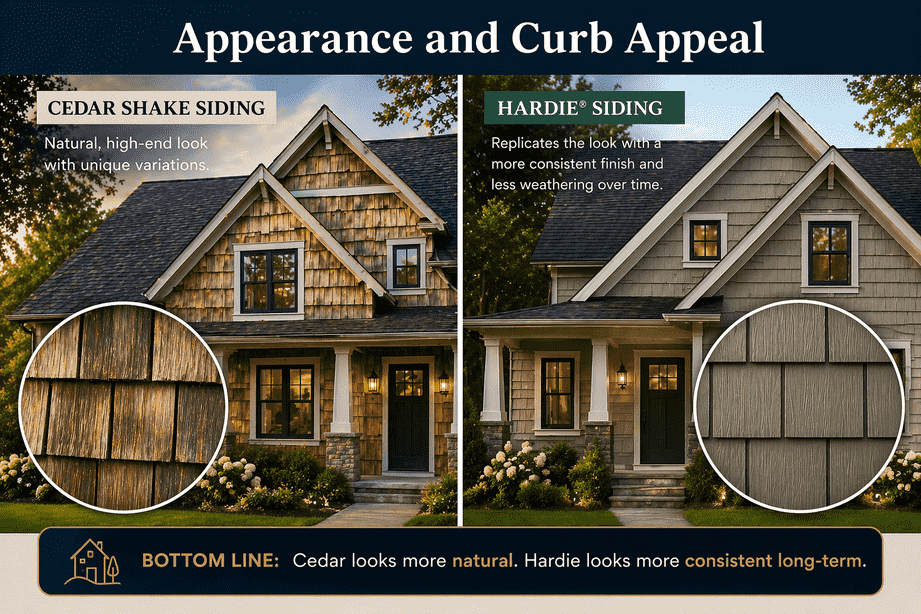
- Cedar shake siding provides a natural, high-end look with unique variations.
- Hardie siding replicates this appearance with a more consistent finish and less weathering over time.
Who Should Choose Hardie vs Cedar
Choose Hardie siding if:
- You want low maintenance
- You live in a humid or storm-prone area
- You want long-term durability
- You plan to stay in your home long-term
- You want better resistance to moisture, mold, and rot
- You want protection against termites and wood-boring insects
- You prefer predictable performance with fewer repairs
- You want a siding option that holds up in North Carolina weather
- You want lower long-term ownership costs
- You want a more fire-resistant exterior material
- You want consistent color and finish with less fading
- You are upgrading for long-term resale value
Choose cedar siding if:
- You want authentic natural wood
- You are willing to maintain it regularly
- You prioritize appearance over maintenance
- You prefer natural material over manufactured siding
- You are willing to stain or seal every few years
- You want a rustic or traditional architectural style
- You are okay with potential variation in color and texture over time
- You plan for ongoing inspections and upkeep
- You are comfortable with higher long-term maintenance costs
- You want a premium wood aesthetic regardless of upkeep requirements
Final Thoughts
Cedar shake siding offers natural beauty, but it requires ongoing maintenance and comes with higher long-term costs. Hardie shingle siding delivers a similar look with better durability, lower maintenance, and stronger performance in North Carolina conditions.
At CPS Construction Services, we help homeowners in Shelby, Gastonia, Kings Mountain, and surrounding areas choose siding that protects their home and investment. Contact CPS Construction Services today to schedule your consultation.
FAQs: Hardie Shingle Siding vs Cedar Shake
Hardie shingle siding typically costs $11 to $22 per square foot installed, while cedar shake siding ranges from $12 to $25+ per square foot, depending on material quality and labor complexity.
Cedar shake siding requires regular staining or sealing every 3 to 7 years, while Hardie fiber cement siding only needs occasional cleaning and repainting every 10 to 15 years.
Hardie siding is better for moisture resistance and mold prevention because it does not absorb water, while cedar shake siding can absorb moisture and develop mold if not properly maintained.
Yes. Many homeowners replace cedar with Hardie siding to achieve the same appearance while gaining better durability, lower maintenance, and longer lifespan.
Yes. Cedar siding should be inspected regularly for rot, insect damage, loose shingles, and moisture issues, especially in areas with heavy rain and humidity.
Hardie fiber cement siding is resistant to termites and wood-boring insects, while cedar shake siding is more vulnerable to insect damage over time.
Both require professional installation, but Hardie siding requires strict adherence to manufacturer guidelines, while cedar shake requires precise spacing and sealing to prevent moisture issues.
Hardie shingle siding is typically the better option for long-term homeowners due to its durability, lower maintenance costs, and consistent performance in harsh weather conditions.