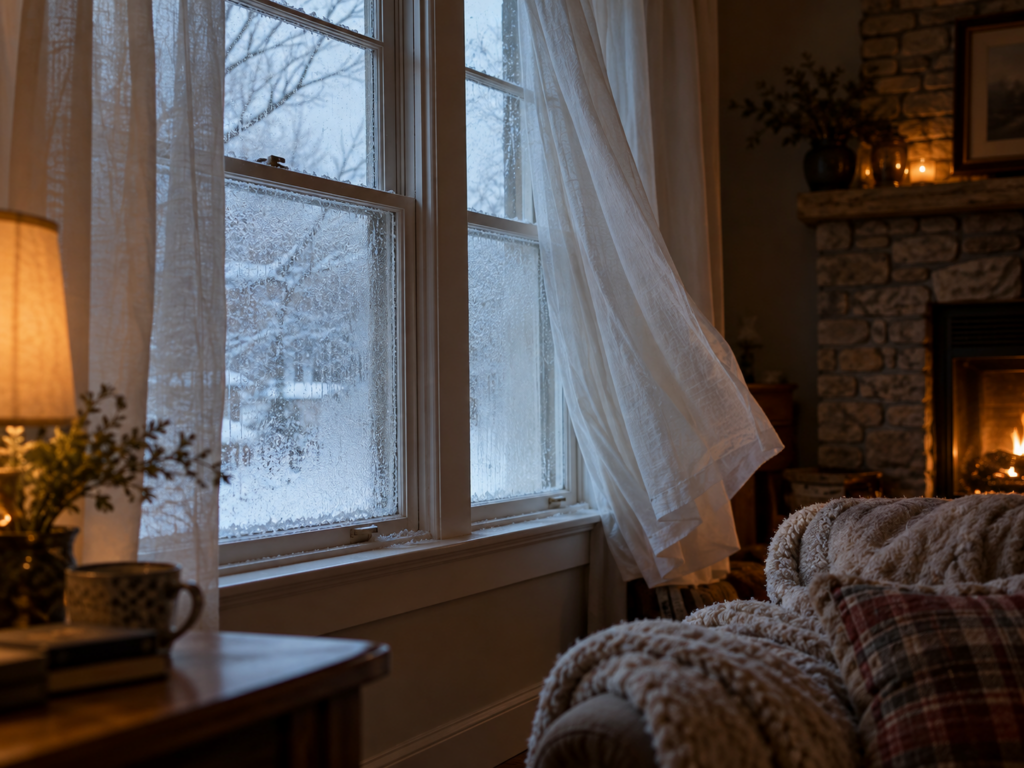
You turn up the heat, but one room still feels colder. You sit near a window and notice a chill, or the curtains move even though the window is closed.
Drafty windows are a common fall and winter comfort problem, but they do not automatically mean you need new windows.
Worn weatherstripping, deteriorated caulk, loose hardware, or small gaps may be repairable. Damaged frames, water intrusion, repeated seal failures, or windows that no longer close properly can point to a larger issue.
CPS Construction Services helps North Carolina homeowners evaluate aging or inefficient windows and determine the right next step for their home.

Why Do My Windows Feel Drafty?
A window can feel drafty because outside air is leaking in, or because the glass itself becomes cold enough to create a draft-like feeling.
Air Leakage Around the Window
Outside air can enter through small gaps around the sash, frame, sill, weatherstripping, trim, or installation area.
Common causes: worn weatherstripping, cracked sealant, loose hardware, frame gaps, improper installation, or a window that no longer closes properly.
Cold Glass That Feels Like a Draft
Sometimes little outside air is entering. Instead, older or poorly insulated glass becomes much colder than the surrounding wall.
Indoor air cools near the glass and moves downward, creating a draft-like sensation. This is especially common with older single-pane windows.
Common Causes of Drafty Windows
Finding the source of the draft is more useful than assuming the entire window needs replacement.
- Worn weatherstripping: Can flatten, crack, loosen, or lose flexibility over time.
- Cracked or deteriorated caulk: May allow air or moisture through gaps around exterior joints.
- Loose or damaged hardware: Can prevent the sash from closing tightly.
- Gaps around the window frame: Poor insulation or movement can create openings between the frame and wall.
- Warped or damaged frames: Rot, cracks, or deformation can prevent a proper seal.
- Failed insulated glass: Fog or moisture between panes may indicate a compromised glass seal.
- Older, less efficient glass: May still feel cold even when the window itself is properly sealed.
How Can You Tell Where a Window Draft Is Coming From?
Start with a few simple checks before assuming the window needs major repair or replacement.
Move your hand around the sash, frame, sill, and trim. Notice any cold spots or moving air.
Look for missing sections, brittle material, flattened seals, or visible gaps.
Cracked or separated caulk around the trim may allow air or moisture into the opening.
A window that sits crooked, will not lock, or requires excessive force may have a hardware, frame, or installation problem.
Can Drafty Windows Be Repaired Without Replacing Them?
Often, yes. If the frame is solid and the window still operates properly, targeted repairs may improve comfort and reduce air leakage.
Repairs That May Help
- Replacing worn weatherstripping
- Resealing small gaps around trim
- Adjusting loose locks or hardware
- Replacing insulated glass in some window systems
When Repair May Not Be Enough
Caulk will not correct a warped frame, weatherstripping will not fix rotted wood, and new hardware will not solve structural movement around the opening.
Repair makes the most sense when the window is still structurally sound and the problem is isolated.
When Should You Consider Window Replacement?
Replacement makes more sense when the problem goes beyond a simple seal, hardware adjustment, or isolated repair.
- Drafts continue after sealing and weatherstripping
- Frames are rotten, warped, cracked, or badly deteriorated
- Windows are difficult to open, close, or lock
- Water intrusion keeps returning
- Multiple insulated windows show failed seals
- Window components feel loose or unstable
- Several problems affect the same window
- Comfort remains poor even after air leaks are addressed
Drafty Window Repair vs. Replacement
The right solution depends on the cause of the problem and the overall condition of the window.
| Window Problem | Repair May Make Sense When | Replacement May Make Sense When |
|---|---|---|
| Draft around the sash | Weatherstripping is worn, but the window is otherwise sound | Drafts continue after proper sealing and adjustment |
| Cracked exterior caulk | The joint is stable and surrounding materials are intact | Gaps keep reopening because the frame is moving or damaged |
| Window will not lock tightly | Hardware is loose, worn, or slightly misaligned | The sash or frame is warped and cannot be aligned properly |
| Fog between panes | The glass unit can be replaced and the frame is still sound | Multiple components or windows are failing |
| Rotten wood | Damage is small and limited | Rot is extensive, recurring, or affecting the frame |
| Cold glass | The window still functions well and comfort is acceptable | Poor thermal performance continues causing comfort problems |
| Water around the window | A specific seal or flashing problem can be corrected | Water intrusion keeps returning or has damaged the frame |
| Several problems at once | Each issue is minor and reasonably repairable | Repairs become extensive or approach replacement complexity |
Two windows can feel equally drafty but still require very different solutions.
Does Condensation Mean You Need New Windows?
Not necessarily. The most important clue is where the condensation appears.
Condensation on the Inside of the Glass
Moisture on the room-facing glass usually forms when warm, humid indoor air meets a colder window surface.
Cooking, showers, humidifiers, and limited ventilation can increase indoor humidity, so this does not automatically mean the window has failed.
Condensation Between the Glass Panes
Fog, haze, or droplets trapped between panes usually indicate that the seal around an insulated glass unit has failed.
In some cases, only the glass unit can be replaced. If the frame, sash, or hardware is also deteriorated, full window replacement may make more sense.
Can Drafty Windows Increase Heating and Cooling Costs?
Yes. Air leaks around windows can let conditioned air escape and outdoor air enter, making your HVAC system work harder to maintain a comfortable temperature.
If you can feel air movement or rooms near certain windows stay noticeably colder, repairing those leaks may improve comfort and reduce unnecessary heating or cooling demand.
What Should You Look for in Replacement Windows?
If replacement is the better option, compare more than appearance. Performance ratings, glass construction, and installation quality all affect comfort and efficiency.
Measures heat transfer through the window. Lower values generally mean better insulation.
Shows how much solar heat passes through the glass. The right level depends on climate, orientation, and shading.
Special coatings help control heat transfer while still allowing natural light into the home.
Multiple panes, sealed spaces, spacers, and gas fills can improve overall thermal performance.
Look for windows that close tightly and limit uncontrolled air movement around the sash.

Why Proper Window Installation Matters
Even a high-quality replacement window can perform poorly if the opening is not prepared, sealed, and flashed correctly.
- Proper leveling and secure fastening
- Insulation around the window opening
- Correct flashing and water management
- Proper sealing around the frame and trim
- Alignment that allows smooth opening and locking
Replacing the window without correcting an existing flashing, sealing, or water-management problem can allow the same issue to return.
A Simple Fall Window Inspection for North Carolina Homeowners
Before colder weather arrives, inspect your windows for small problems that may be easier to fix now than later.
- Check weatherstripping and exterior sealant
- Inspect glass, frames, sills, locks, and hardware
- Look for gaps, staining, peeling paint, soft wood, or cracked vinyl
- Check for fog or moisture between glass panes
- Open, close, and lock each window to confirm proper operation
- Inspect nearby siding, trim, and flashing for signs of water intrusion
Catching these issues early may help prevent a small repair from becoming a more extensive exterior problem.
Should You Repair or Replace Your Drafty Windows?
If the frame is sound, the glass is intact, and the window still operates properly, a drafty window may only need new weatherstripping, sealant, or a minor adjustment.
Replacement becomes more practical when frames are deteriorating, windows no longer close correctly, water intrusion keeps returning, or several problems are happening at once.
CPS Construction Services helps homeowners evaluate aging windows and determine the right next step. Services include Window Installation Services in North & South Carolina, Window Replacement Services, Residential Window Installation Services, and Commercial Window Installation Services.
If cold rooms, damaged frames, or recurring drafts are becoming a problem, contact CPS Construction Services to schedule an evaluation.
- Drafty Windows
Frequently Asked Questions
Cold air around a closed window is commonly caused by worn weatherstripping, gaps around the frame, deteriorated exterior sealant, loose hardware, or a sash that is not closing tightly. In some cases, very cold glass can also create a draft-like sensation even when there is little actual air leakage.
Yes, when the draft is coming from the area where the sash meets the frame and the window is otherwise in good condition. Weatherstripping will not correct warped frames, damaged glass, installation gaps, or structural deterioration.
Caulk can help seal stationary exterior joints where the existing sealant has cracked or separated. It should not be used on moving window components or drainage openings. If a gap repeatedly returns after being sealed, the window or surrounding materials should be inspected for movement or damage.
Fogging between panes usually indicates that the seal around an insulated glass unit has failed and moisture has entered the sealed space. Depending on the window, the glass unit may be replaceable without replacing the entire frame.
Not necessarily. Condensation on the room-facing side of the glass often results from indoor humidity contacting a cold glass surface. Condensation trapped between panes is more indicative of an insulated glass seal problem.
Age alone is not enough reason to replace a window. Condition, operation, water resistance, comfort, air leakage, frame integrity, and thermal performance are more useful factors when deciding whether replacement makes sense.
Consider a professional evaluation when drafts continue after basic sealing, the frame is damaged, windows will not open or lock correctly, water is entering around the opening, fogging appears between panes, or several problems affect the same window.


